

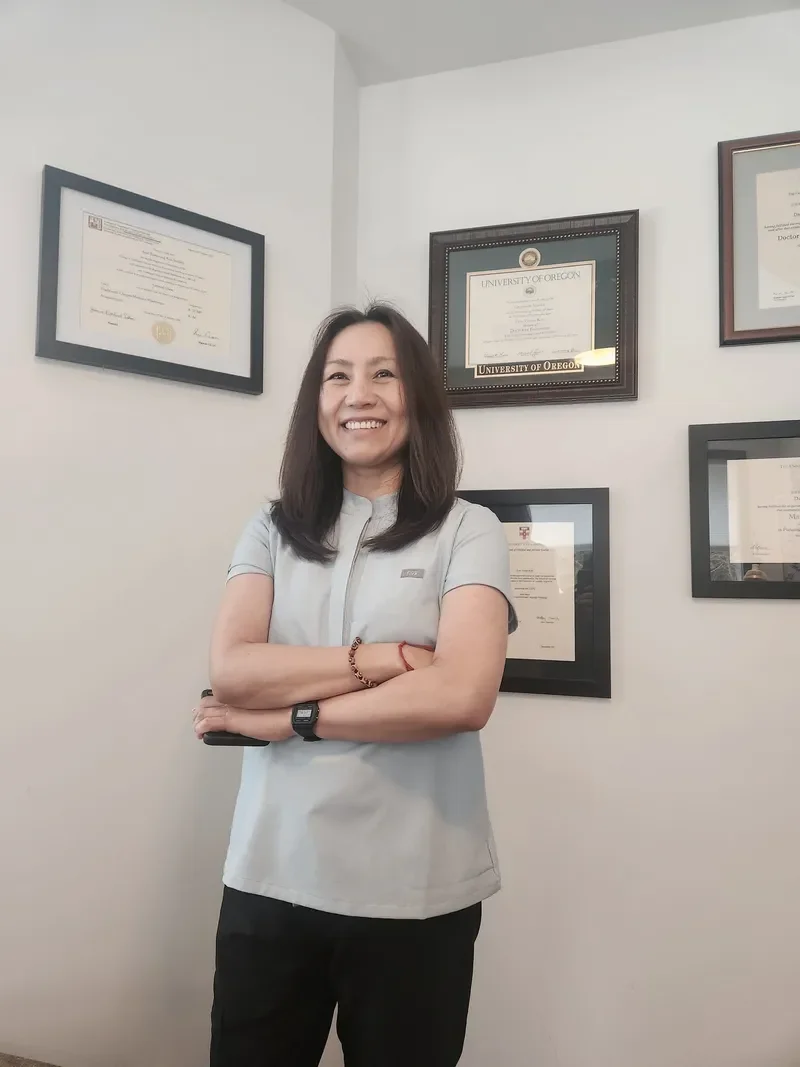
Ariel Kim
R.Ac., R. TCMP, PhD
Hello, and welcome to DaBōK. Before I became an acupuncturist, I trained as an applied linguist. Acupuncture and Traditional Chinese Medicine asks you to read the body the way a linguist reads a text: to listen carefully, to notice what is missing, and to trust that the body is always speaking, even when no one is using words.

Our Name
The clinic is named after my late grandmother, DaBōK (다복), which means "many fortunes" in Korean. When I was a child, whenever I felt unwell, she would place her hand over the discomfort and whisper, "내 손이 약손이다," "my hand is medicine." And somehow, the pain would ease. She is the reason I first understood healing as something offered through care and touch, and her memory stays with me in how I practise.

A Heritage of Healing
I also come from a family with a long tradition of medicine. In 1517, An-guk Kim, a Korean Joseon scholar and my ancestor, compiled Ch'angjinbang Chwalyo, one of Korea's earliest medical texts on epidemics. Generations later, my great-grandfather and grandfather continued that tradition, practising Korean Oriental Medicine grounded in the classical teachings of Traditional Chinese Medicine. I carry that inheritance into every treatment.
How I practice
I believe that when the mind is distressed, the body quietly follows, and when the body is unwell, the mind cannot settle. So I treat the whole person rather than a single symptom, looking for the imbalance underneath what first brings someone to my chair.
Every treatment begins with listening. I take time to understand your history, your patterns, and how you are feeling in body and mind, because the same complaint can have very different roots in different people.

The Heishui Method
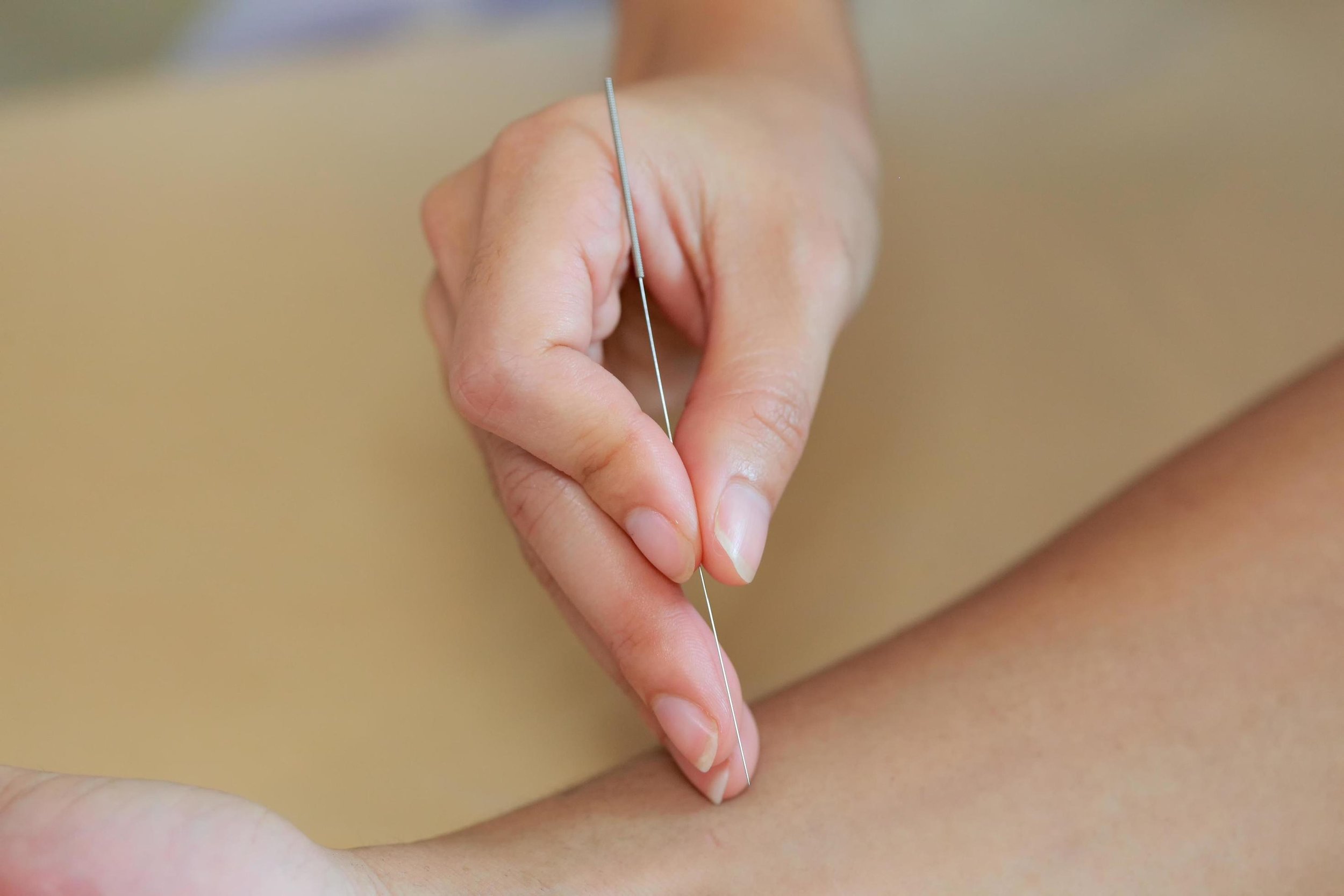
My primary approach to acupuncture is the Heishui Method, a refined needling technique I trained and certified in under its teacher, Master Wan Cheng Liu. It is built around comfort: the focus is on precise, careful needle placement so that a session feels calm and manageable from start to finish. That makes it especially well suited to anyone who feels anxious about needles, has had a difficult experience with acupuncture before, or is trying it for the first time. Most people find it far gentler than they expected.
Daishin
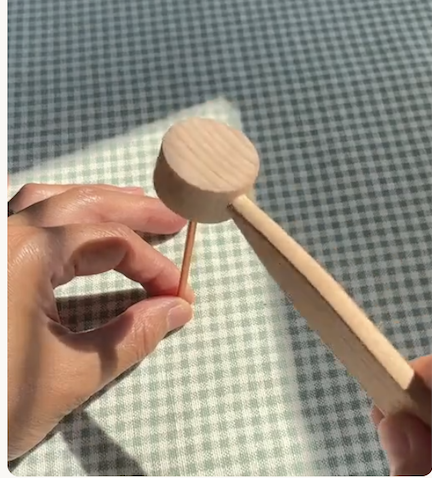
For those who would rather not be needled at all, I offer Daishin, a traditional Japanese technique. Instead of inserting needles, it stimulates the same acupuncture points through light, rhythmic tapping on the surface of the skin, so nothing ever pierces it. It is a gentle option for children, for highly sensitive or needle-averse patients, and for anyone who wants the benefits of point stimulation in the least invasive way possible.

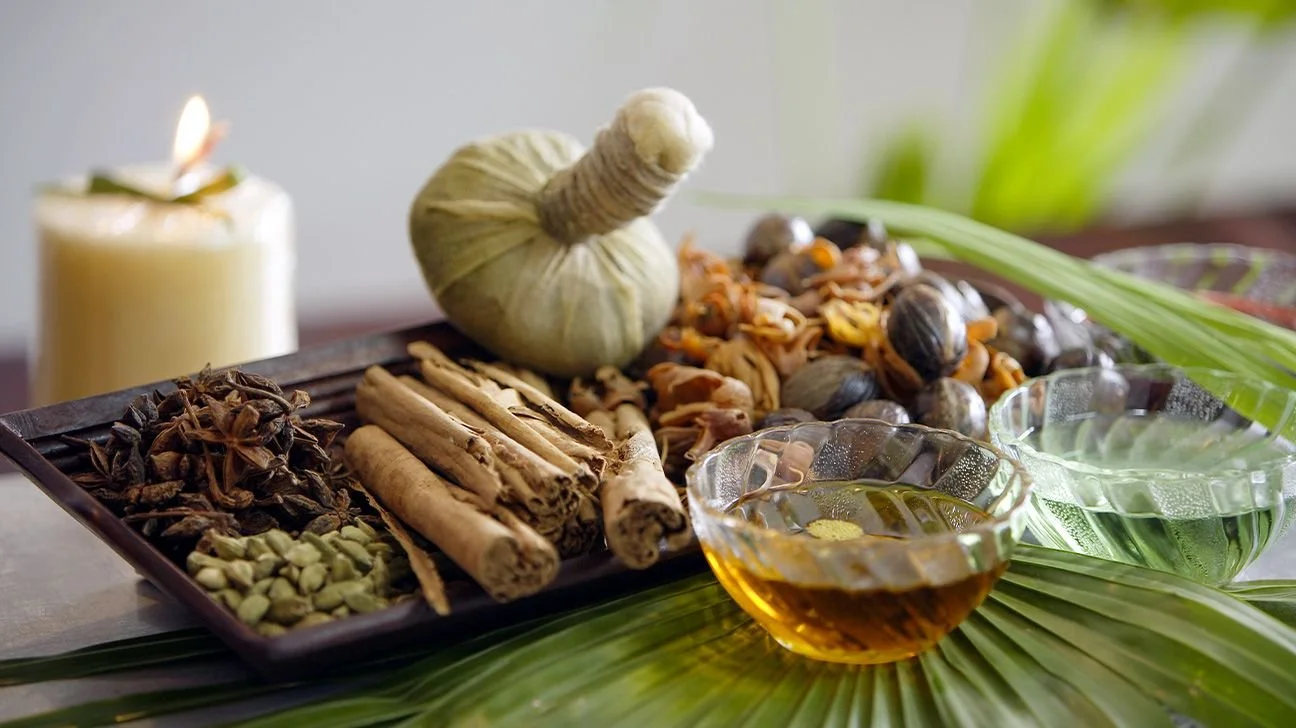
Alongside acupuncture, I often prescribe Chinese herbal medicine, either on its own or to extend the work of a treatment between visits. I work with a range of forms, from ready-made patent formulas to granules and raw herbs, choosing what best fits your pattern, your daily life, and how your body responds over time. For many people, herbs are what turn a series of treatments into lasting change.
Professional background
Regulated licenses
Registered Acupuncturist (R.Ac.), College of Traditional Chinese Medicine Practitioners and Acupuncturists of Ontario (CTCMPAO)
Registered Traditional Chinese Medicine Practitioner (R.TCMP), CTCMPAO
Education and specialist training
Diploma in Traditional Chinese Medicine (four-year professional program), Toronto School of Traditional Chinese Medicine
Certified in the Heishui Method by Master Wan Cheng Liu, Ph.D.
Ph.D., East Asian Languages and Literatures, University of Oregon
Faculty appointments
Department of Linguistics and Languages, McMaster University
Toronto School of Traditional Chinese Medicine
Let’s begin
Whether you're managing chronic pain, navigating stress, or simply ready to feel like yourself again, I'm here to support you.
Ariel Kim, R.Ac, R.TCMP, Ph.D